What Dysregulation Can Look Like in Young Children
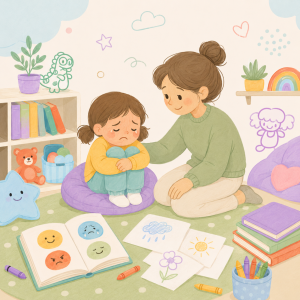
Big feelings are not “bad behavior.” Often, they are a sign that a child’s body and brain need support. When we understand behavior as communication, we can respond with more calm, connection, and confidence.
What Dysregulation Means
Dysregulation means a child is having a hard time managing their emotions, body, or behavior in that moment.
They may not be trying to be difficult. They may be overwhelmed, tired, hungry, overstimulated, scared, frustrated, or needing connection.
What It Can Look Like
Dysregulation can look different for every child.
It may look like:
- crying
- yelling
- running away
- clinging
- refusing
- hitting or kicking
- shutting down
- acting extra silly
- melting down over something small
The behavior is what we see. The feeling underneath is what needs support.
Why Behavior Is Communication
Young children do not always have the words or skills to say:
“I’m overwhelmed.”
“I need help.”
“I feel unsafe.”
“I don’t know how to stop.”
So their bodies communicate for them.
When we look beneath the behavior, we can respond to the need — not just the action.
How Caregivers Can Stay Steady
A calm caregiver helps create safety.
This does not mean you have to feel calm inside. It means you try to slow your voice, soften your body, and reduce the intensity of the moment.
Before correcting, ask:
“What is my child showing me right now?”
Simple Support Strategies
Try one small support at a time:
- Name the feeling: “You’re really upset.”
- Lower demands: “We can pause.”
- Use fewer words.
- Offer movement: jumping, pushing a wall, shaking it out.
- Stay nearby if safe.
- Reconnect after the moment passes.
Connection does not mean there are no boundaries. It means the child does not have to face big feelings alone.
When to Seek More Support
Consider reaching out for support if big feelings are frequent, intense, unsafe, or interfering with daily life.
You may also want support if your child often hurts themselves or others, shuts down for long periods, or if you feel unsure how to help.
Mindful Minis is educational and non-clinical. For concerns about your child’s development, behavior, or emotional well-being, connect with a pediatrician, early childhood specialist, or qualified mental health professional.